
I try to clear my mind of stereotypes when travelling but, in the case of the Middle East, it is hard, as we’re bombarded by so many negative messages about Arabic culture and about the region in general. However, I’m glad to say that it didn’t take long to start dispelling some of these Western assumptions very soon after my arrival in Oman. Having got into a taxi with several other travellers, the man in the front seat next to the driver asked: ‘So, how many wives do you have?’. There was a slightly awkward pause. I’m no expert on Arabic culture, but I am guessing this would pass as a pretty direct question in most places. ‘I only have one wife,’ the driver replied politely. ‘And I love her. I have no intention to take any more.’
Since then I’ve encountered the most cultured, tolerant and educated group of people you could wish to meet in Jordan, witnessed almost half the people in a Tunisian train carriage get up to offer their seats to a few of my fellow travellers who were over 70 (something I have never seen anywhere else in the world), and travelled to some of the most extraordinarily beautiful landscapes and coastlines I have ever seen in Egypt. Obviously some Middle Eastern countries are, sadly, out of bounds. However, Oman is, surely, one of the Middle East’s most exotic and beguiling countries, and I can thoroughly recommend you go and take a look for yourself.
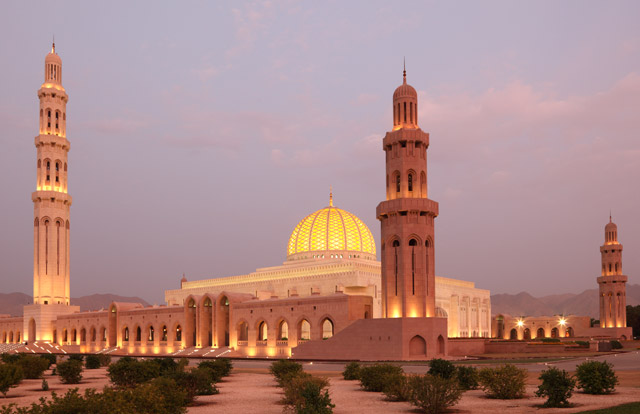
Oman lies on the south-east coast of the Arabian Peninsula. The Portuguese arrived in Oman in 1507 and occupied Muscat (on the north-east coast) for 143 years, and the city’s European influence can still be felt in the capital. A vast gravel desert plain covers the majority of Oman, with mountain ranges along the north and south-east coast.
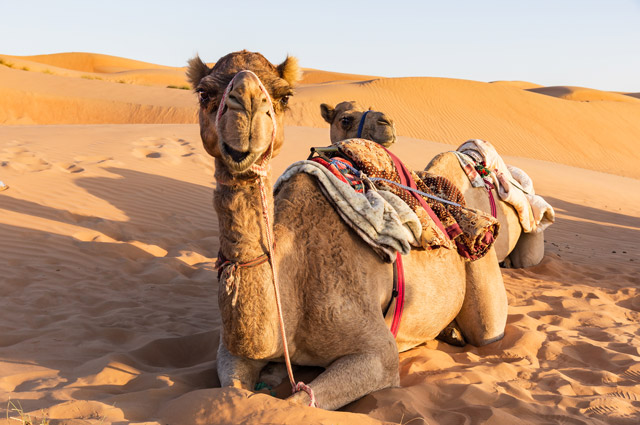
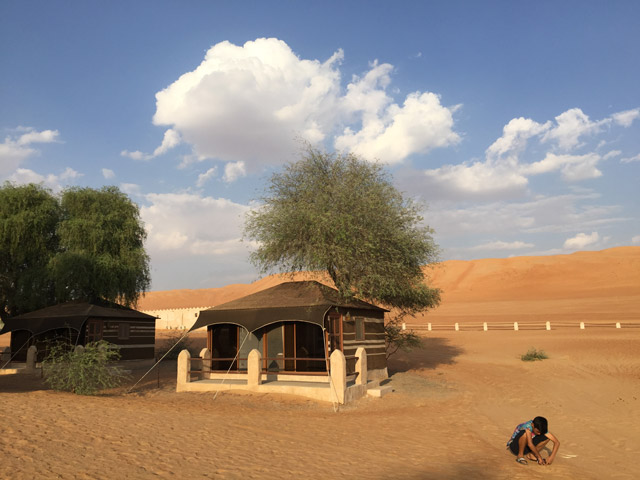
From the moment you arrive, you are aware of the desert. As you venture into it, you begin to adjust to the vastness of the space around you. Frankincense trees dot the landscape, and there are camels – lots of them – striding, apparently purposefully, across the desert. You begin to marvel at any life existing here in this dry, dusty and seemingly barren place. The fact that people could survive, let alone thrive, in this hostile environment is extraordinary and yet, they do.
The nomadic people of Arabia, the Bedu, have lived here for centuries. Although little of the Bedu’s traditional lifestyle, described by Wilfred Thesiger in his classic book Arabian Sands (my favourite travel book), exists today, they do still live in the desert and practise some of their unique customs and traditions. Many have adopted sedentary lifestyles, but you can still see women wearing traditional face masks and intricately embroidered clothes. Many have reinvented themselves as guides, and the chance to spend a night under the stars, eat a traditional Bedu meal and stay in a camp is not to be missed and, gives you some idea of what Thesiger’s journey through the ‘Empty Quarter’ might have been like.
Oman is still a decidedly exotic land to Western eyes. The aroma of spices and frankincense is all-pervasive once you reach towns and villages – take time to wander through markets, medinas and souks (the ones in Muscat are particularly good) in search of richly embroidered textiles, handmade leather goods, perfumes and spices. In farming villages you’ll see traditional dyeing of goat-hair carpets, while a chance to explore the country’s superb desert, mountains and coast is a key part of any holiday here.
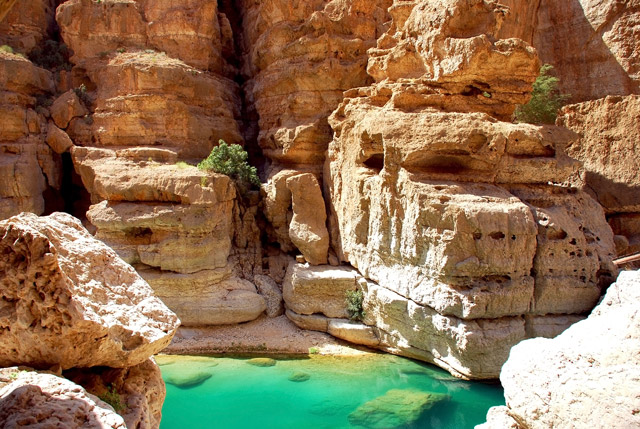
Driving inland from Muscat towards the ‘green mountain’ of Jebel Akhdar you pass terraced farming villages. There are lakes, forts and oases ‘wadis’ to discover – the beauty, and instinctive relief, of coming across a wadi in the midst of endless desert is indescribable (bring your swimming costumes!).
Other highlights of a visit include seeing turtles lay eggs on beautiful wide white-sand beaches, and dolphin-watching off Muscat. The country’s also gaining a reputation for whale-watching off the south coast, and there are some very good, remote, diving spots such as Mirbat where a fabulously turquoise sea meets stark desert and rocky coastline. Oh, and I have to mention the Call to Prayer … it’s resonant, moving, unforgettable.
Find out about our small group family holiday to Oman - Dolphins & Dunes (suitable for children aged 7+) - or contact us to check availability.